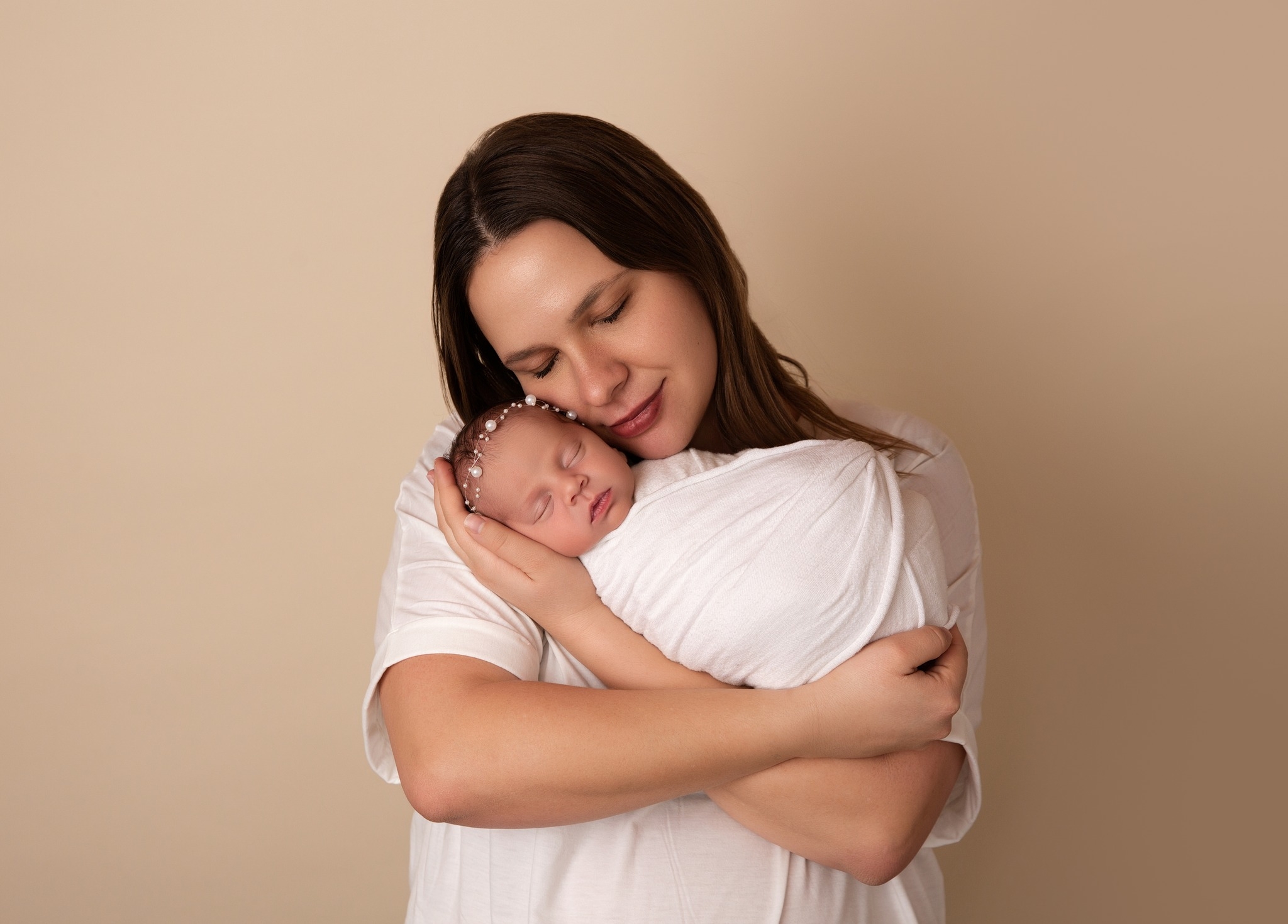
One of the most common questions I hear from exhausted parents is, "How do I get my baby to fall asleep on their own?" Learning how to help baby self soothe is a milestone that transforms not just nighttime but your entire family's quality of life. When babies can settle themselves to sleep and resettle during normal night wakings, everyone gets the rest they need to thrive.
As a pediatric sleep consultant certified through the Institute of Pediatric Sleep and Parenting, I've guided hundreds of families through the process of teaching self-soothing skills. In this comprehensive guide, we'll explore what self-soothing actually means, when babies are developmentally ready for it, evidence-based gradual approaches that work, and practical strategies for supporting your baby through this important transition.
What Is Self-Soothing?
Self-soothing refers to a baby's ability to calm themselves down and transition from a wakeful state to sleep without needing significant parental intervention. When you're learning how to help baby self soothe, you're essentially teaching your baby the skill of sleep initiation--arguably one of the most important life skills they'll develop in their first year.
Self-soothing doesn't mean leaving your baby to cry alone or ignoring their needs. Rather, it's about gradually supporting your baby in developing their own internal mechanisms for emotional and physical regulation. Research published in Developmental Psychology shows that self-soothing is a developmental skill that emerges over time, with individual variation based on temperament, development, and parenting practices.[1]
What Self-Soothing Looks Like
A baby who can self-soothe might:
- Fall asleep within 10-20 minutes of being put in the crib awake
- Fuss briefly when transitioning to sleep but settle without intervention
- Return to sleep after normal night wakings without calling for help
- Use comfort behaviors like sucking fingers, rubbing their face, or repositioning
- Babble or talk quietly before drifting off
- Connect sleep cycles during naps, extending them beyond one sleep cycle
What Self-Soothing Is NOT
Understanding what self-soothing isn't is equally important:
- It's not ignoring your baby: Responsive parenting remains essential. Self-soothing is about building skills, not withdrawing support.
- It's not forcing independence: Babies learn self-soothing when developmentally ready and with appropriate support.
- It's not a single event: Self-soothing develops gradually over time with practice and consistency.
- It's not the same for every baby: Temperament, age, and experience all influence how and when self-soothing develops.
Developmental Readiness for Self-Soothing
Before focusing on how to help baby self soothe, it's crucial to understand when babies are developmentally capable of this skill. Expecting self-soothing before a baby is ready leads to frustration for both parents and baby.
The Newborn Period (0-3 Months)
Newborns are not developmentally ready for self-soothing. Their nervous systems are immature, and they lack the neurological capacity for self-regulation. During this period, babies need extensive parental help to calm and fall asleep. This is completely normal and appropriate.[2]
What you can do during the newborn period:
- Respond promptly to cries and fussiness
- Provide lots of holding, rocking, and physical comfort
- Begin establishing consistent sleep routines
- Occasionally practice putting baby down drowsy (without expectation)
- Create a conducive sleep environment (dark, white noise, appropriate temperature)
The Transition Period (3-4 Months)
Around 3-4 months, babies undergo significant neurological development. Their circadian rhythms begin maturing, and they become capable of longer sleep stretches. This is when the foundation for self-soothing can begin to form, though most babies still need substantial support.
The 4-month sleep regression often occurs during this time as babies transition to more adult-like sleep cycles. This is actually an opportunity--as sleep architecture changes, babies become more capable of learning independent sleep skills.[3]
The Optimal Window (4-6 Months)
Most sleep experts consider 4-6 months the optimal window for teaching how to help baby self soothe. By this age:
- Circadian rhythms are more established
- Babies can sleep longer stretches without feeding (though some still need 1-2 night feeds)
- Neurological development supports self-regulation
- Object permanence is not fully developed (making separation anxiety less intense)
- Sleep architecture has transitioned to cycling patterns
The American Academy of Pediatrics and the National Institutes of Health support appropriate sleep training interventions starting around 4-6 months of age.[4]
Beyond 6 Months
It's never too late to teach self-soothing, though older babies and toddlers may have more established habits that require more time to change. Separation anxiety, which typically peaks around 8-10 months and again around 18 months, can also make the process more challenging during those periods.
Preparing to Teach Self-Soothing
Before implementing any strategies for how to help baby self soothe, ensure you've laid the proper groundwork. Successful self-soothing depends on having the right conditions in place.
Medical Clearance
Rule out any medical issues that could be interfering with sleep:
- Reflux or silent reflux
- Ear infections
- Food sensitivities or allergies
- Respiratory issues
- Other sources of discomfort
Consult your pediatrician before beginning any sleep training if you have concerns about underlying medical conditions.
Optimal Sleep Environment
Create a sleep environment that supports self-soothing:
- Darkness: Use blackout curtains to create a dark environment for naps and nighttime
- White noise: Continuous white noise at 50-65 decibels masks disruptions
- Temperature: Keep the room at 68-72°F (20-22°C)
- Safe sleep surface: Follow AAP safe sleep guidelines with a firm, flat mattress and nothing in the crib
- Appropriate sleepwear: Sleep sack or wearable blanket appropriate for room temperature
Age-Appropriate Schedule
An overtired baby cannot self-soothe effectively. Ensure your baby is on an age-appropriate schedule with proper wake windows:
- 4 months: 1.5-2 hour wake windows
- 5-6 months: 2-2.5 hour wake windows
- 7-8 months: 2.5-3 hour wake windows
- 9-12 months: 3-3.5 hour wake windows
Watch for sleepy cues like yawning, rubbing eyes, and looking away from stimulation to time sleep periods appropriately.
Consistent Bedtime Routine
A predictable bedtime routine signals to your baby's brain that sleep is coming. Research shows that consistent bedtime routines improve sleep outcomes in infants.[5] Your routine might include:
- Bath (if part of your routine)
- Diaper change and pajamas
- Feeding (if appropriate, ending 15-20 minutes before crib time)
- Books or songs
- Goodnight phrase and crib placement
Keep the routine to 20-30 minutes and end it in the room where baby will sleep.
Gradual Approaches to Teaching Self-Soothing
There are many methods for teaching how to help baby self soothe. Gradual approaches allow you to support your baby while slowly transferring the skill of sleep initiation to them. These methods typically involve less crying but take longer to see results.
The Chair Method (Sleep Lady Shuffle)
This gentle method involves sitting in a chair next to your baby's crib while they fall asleep, then gradually moving the chair farther away over 1-2 weeks.
How it works:
- Days 1-3: Place a chair right next to the crib. Complete your bedtime routine and place baby in the crib awake. Sit in the chair and offer verbal reassurance and minimal physical touch (patting, shushing). Stay until baby falls asleep.
- Days 4-6: Move the chair halfway between the crib and the door. Continue offering verbal reassurance but reduce physical touch.
- Days 7-9: Move the chair to the doorway. Offer only verbal reassurance.
- Days 10-12: Sit outside the room where baby can still hear you but not see you.
- Days 13+: Complete the routine and leave the room, checking as needed.
This method works well for parents who want to be present throughout the process and for babies who find parental presence reassuring.
Pick Up/Put Down Method
Developed by Tracy Hogg, this method allows you to physically comfort your baby while still teaching that sleep happens in the crib.
How it works:
- Complete your bedtime routine and place baby in the crib awake.
- If baby fusses mildly, wait a moment to see if they settle.
- If baby cries, pick them up and comfort them until calm (not until asleep).
- Once calm, place baby back in the crib.
- Repeat as many times as necessary until baby falls asleep in the crib.
This method can be physically demanding and may take many repetitions initially. It works best for babies who calm quickly when picked up and for parents who want to provide hands-on comfort.
Timed Checks (Ferber Method)
This method involves putting baby in the crib awake and returning at progressively longer intervals to offer brief reassurance.
How it works:
- Complete your bedtime routine and place baby in the crib awake.
- Leave the room.
- Return after 3 minutes (or your starting interval) to briefly check on baby. Offer verbal reassurance for 1-2 minutes without picking up. Leave while baby is still awake.
- Wait 5 minutes before the next check.
- Wait 10 minutes before the next check.
- Continue at 10-minute intervals until baby falls asleep.
- Increase starting intervals on subsequent nights.
This method typically produces results within 3-7 days. It works well for babies who become more stimulated by parental presence and for parents comfortable with some protest crying.
Fading Methods
Fading involves gradually reducing the amount of assistance you provide at sleep times.
Examples of fading:
- If you currently nurse to sleep: nurse until drowsy, then unlatch and put baby in crib. Gradually nurse for shorter periods before crib placement.
- If you currently rock to sleep: rock until drowsy, then place in crib. Gradually reduce rocking time and intensity.
- If you currently pat to sleep in the crib: gradually reduce patting time and intensity until you're just placing your hand on baby, then just standing nearby, then leaving the room.
Fading methods are highly customizable and can be adapted to any current sleep association.
Supporting Self-Soothing Development
Beyond formal sleep training methods, there are many ways to support your baby's natural development of self-soothing skills.
Offer Comfort Objects (After 12 Months)
Once your baby is 12 months old, introducing a lovey or comfort object can support self-soothing. Choose a small, soft item without buttons or detachable parts. Include it in the bedtime routine so baby associates it with sleep comfort.[6]
Practice During Wake Times
Self-soothing skills develop during awake periods too. Allow your baby opportunities to practice calming down from mild distress during the day:
- Wait a few moments before responding to mild fussiness
- Provide graduated support (verbal first, then physical if needed)
- Allow independent play time with you nearby
- Praise calm, independent behavior
Model Calm Behavior
Babies are incredibly attuned to their caregivers' emotional states. When you approach sleep time calmly and confidently, your baby picks up on those cues. If you're anxious about bedtime, your baby may sense that anxiety.
Ensure Adequate Physical Activity
Babies who get plenty of physical activity during awake times tend to sleep better. Provide opportunities for tummy time, reaching, grasping, and eventually crawling and cruising during awake periods.
Watch Wake Windows
An overtired baby produces stress hormones (cortisol and adrenaline) that make self-soothing much more difficult. An undertired baby isn't tired enough to fall asleep easily. Finding the right balance is crucial for successful self-soothing.
Common Challenges When Teaching Self-Soothing
As you work on how to help baby self soothe, you'll likely encounter some challenges. Here's how to navigate common obstacles:
Protest Crying
Some crying is inevitable when changing sleep habits. Remember that crying is your baby's way of communicating displeasure with change--it doesn't mean you're causing harm. Studies show that well-implemented sleep training does not cause long-term negative effects on infant development or attachment.[7]
To manage protest crying:
- Choose a method that matches your comfort level with crying
- Have a plan in place before you start
- Remember that consistency shortens the overall process
- Support your own emotional wellbeing throughout
Extinction Burst
Around night 3-4 of sleep training, many babies intensify their protest before improving. This is called an extinction burst--a last effort to return to familiar patterns before accepting new ones. If you stay consistent through this challenging period, improvement typically follows quickly.
Setbacks and Regressions
Illness, travel, teething, developmental leaps, and schedule changes can all cause temporary sleep setbacks. When this happens:
- Provide comfort as needed during the disruption
- Return to your plan as soon as the disruption passes
- Remember that skills learned once are easier to relearn
Different Responses from Naps vs. Nighttime
Many babies learn self-soothing faster at bedtime than at naps, or vice versa. This is normal--sleep pressure is different at different times of day. Focus on bedtime first, as sleep pressure is highest then, and naps often follow within a week or two.
Early Morning Wakings
Self-soothing for the 4-6 AM waking is often the hardest to achieve because sleep pressure is low after a full night. Be consistent with your approach during early morning wakings just as you are at bedtime.
What to Expect: A Realistic Timeline
When teaching how to help baby self soothe, having realistic expectations helps you stay consistent. Here's a general timeline, though individual variation is significant:
- Nights 1-3: Often the most challenging. Babies may protest significantly as they adjust to new expectations.
- Nights 4-7: Most babies show notable improvement. Protest decreases and sleep extends.
- Weeks 2-3: Skill consolidation. Self-soothing becomes more automatic.
- Ongoing: Continued consistency reinforces the skill. Occasional brief protests at sleep times are normal.
Full resolution of night wakings often takes 2-4 weeks, while naps may take 3-6 weeks to fully improve.
When to Seek Professional Help
Some families benefit from personalized support when teaching self-soothing. Consider reaching out to a certified sleep consultant if:
- You've tried on your own without success
- You're unsure which method is right for your situation
- Your baby has unique circumstances (medical issues, twins, etc.)
- Sleep deprivation is significantly affecting your wellbeing
- You want accountability and support throughout the process
As a consultant certified through the Institute of Pediatric Sleep and Parenting, I provide comprehensive, individualized support tailored to your family's needs and values. Schedule a free discovery call to learn how we can help, or call us at (213) 935-0769.
The Long-Term Benefits of Self-Soothing
Teaching how to help baby self soothe is an investment that pays dividends for years. Children who learn healthy sleep habits early tend to:
- Sleep better as toddlers and preschoolers
- Have fewer bedtime battles and sleep protests
- Navigate sleep disruptions (illness, travel) more easily
- Develop better emotional regulation overall[8]
- Show improved daytime behavior and mood
Beyond the benefits to your child, parents who sleep well are more patient, more present, and more able to enjoy the parenting journey. Your wellbeing matters, too.
Final Thoughts
Learning how to help baby self soothe is one of the most transformative things you can do for your family's sleep. The process requires patience, consistency, and faith in your baby's ability to learn. Remember that self-soothing is a skill--and like all skills, it develops with practice and support.
You don't have to do this alone. Whether you implement strategies on your own or seek professional guidance, know that better sleep is possible. Your baby is capable of learning to sleep well, and you're capable of teaching them. Trust the process, stay consistent, and soon peaceful nights will become your new normal.
Ready to take the first step? Reach out today, or call us at (213) 935-0769 for a free consultation.
References
- 1. Burnham, M. M., et al. (2002). Nighttime Sleep-Wake Patterns and Self-Soothing. Developmental Psychology, 38(5), 706-719. https://pubmed.ncbi.nlm.nih.gov/12220048/
- 2. National Sleep Foundation. (2023). Baby Sleep: What to Expect. https://www.sleepfoundation.org/baby-sleep
- 3. Galland, B. C., et al. (2012). Normal Sleep Patterns in Infants and Children. Seminars in Pediatric Neurology, 19(4), 165-173. https://pubmed.ncbi.nlm.nih.gov/23245609/
- 4. American Academy of Pediatrics. (2018). Behavioral Interventions for Pediatric Insomnia. https://pediatrics.aappublications.org/
- 5. Mindell, J. A., et al. (2015). Bedtime Routines for Young Children: A Dose-Dependent Association with Sleep Outcomes. Sleep, 38(5), 717-722. https://pubmed.ncbi.nlm.nih.gov/25325483/
- 6. American Academy of Pediatrics. (2022). Safe Sleep Recommendations. https://www.aap.org/en/patient-care/safe-sleep/
- 7. Price, A. M., et al. (2012). Five-Year Follow-up of Harms and Benefits of Behavioral Infant Sleep Intervention. Pediatrics, 130(4), 643-651. https://pubmed.ncbi.nlm.nih.gov/22966034/
- 8. Mindell, J. A., et al. (2017). Long-Term Efficacy of Behavioral Intervention for Infant Sleep. Sleep Medicine, 36, S137. https://pubmed.ncbi.nlm.nih.gov/
Need Help with Your Baby's Sleep?
Every child is different. Get a personalized sleep plan tailored to your family's unique needs. Call or text Rose directly at (213) 935-0769 for a free 15-minute discovery call.